

Every year, thousands of Florida homeowners pay more in property taxes than they legally have to — not because of anything complicated, but because nobody explained one form and one deadline. The Florida Homestead Exemption can reduce your home’s assessed value by up to $50,000 and permanently cap how fast that value grows for tax purposes, yet it gets missed, misunderstood, or ignored constantly.
In this guide, we’ll walk through everything you need to know: who qualifies, how to file, what the Save Our Homes cap actually means for your long-term finances, and why March 1 is a date no new Florida homeowner can afford to forget.
Florida added more than 365,000 new residents between 2022 and 2023 — ranking first in the nation for numeric population growth, according to the U.S. Census Bureau. Many of those new arrivals are purchasing homes in a state where property tax rules work very differently from what they knew before.
This guide is for them — and for every Florida homeowner who has never had the Homestead Exemption explained in plain language.
What Is the Florida Homestead Exemption?


The Constitutional Basis
The Florida Homestead Exemption isn’t a government program that can be quietly cut from next year’s budget. It’s written directly into Article VII, Section 6 of the Florida Constitution — making it one of the strongest homeowner protections in the country. Florida voters have reinforced and expanded it multiple times over the decades, including the 2008 portability amendment that allows homeowners to carry their accumulated savings to a new Florida home when they move.
That constitutional foundation matters because it signals long-term commitment. This protection isn’t optional for counties or subject to annual legislative reauthorization. It’s a right you earn the moment you qualify — and it stays with you as long as you own and occupy the home.
What the Exemption Actually Does
The standard exemption has a two-part structure that confuses a lot of new homeowners, so let’s break it down clearly.
- The first $25,000 of your home’s assessed value is exempt from all property taxes, including school district taxes.
- The second $25,000 applies to the portion of assessed value between $50,000 and $75,000, exempting that slice from all taxes except school district taxes.
Here’s what that looks like in practice: if your home is assessed at $300,000, the Homestead Exemption reduces your taxable value to $250,000. Florida’s minimum Required Local Effort millage for school districts is currently set at 3.0 mills — meaning $3 per $1,000 of assessed value — which is why the school district distinction in the second tier matters.
With Florida’s median home sale price sitting at approximately $415,000 as of early 2025, a $50,000 reduction in assessed value cuts roughly 12% of taxable value. At Florida’s average effective property tax rate of approximately 0.80%, that reduction saves most homeowners between $400 and $550 per year — every year, for as long as they own and occupy the home.
Who Qualifies for the Florida Homestead Exemption?


Primary Residence Requirement
The property must be your permanent primary residence as of January 1 of the tax year for which you’re applying. This single requirement eliminates the most common misconceptions. If you own multiple properties in Florida, only one can carry the exemption — the one where you actually live. If your driver’s license, vehicle registration, or voter registration still lists an address in another state, those records need to be updated before you apply.
Citizenship and Residency
You must be a permanent resident of Florida — either a U.S. citizen, a permanent resident alien with appropriate documentation, or someone who otherwise qualifies under Florida law. Seasonal residents and snowbirds who winter in Florida but maintain a primary home elsewhere are not eligible, regardless of how many months per year they spend in the state.
What Does Not Qualify


Several property types are ineligible entirely:
- Rental properties
- Vacation homes
- Investment properties
- Commercial properties
- Properties held in certain trusts or LLCs (with narrow exceptions for qualifying trusts where a natural person holds a beneficial interest)
If you’re currently claiming a homestead or similar property tax exemption in another state, you cannot also claim Florida’s exemption until you formally sever that prior connection and establish Florida as your sole primary residence.
For broader context: Florida has approximately 9.3 million housing units statewide across all 67 counties, according to the 2020 U.S. Census — the third-largest housing stock of any state in the nation. The Homestead Exemption is broadly available to primary homeowners across every one of those counties, from Miami-Dade and Broward in South Florida to Orange and Hillsborough in the Central Florida metro, to Duval and Pinellas along the North and Gulf Coast regions. Florida’s homeownership rate of approximately 67.4% as of 2023 means the majority of Florida households can potentially benefit.
The March 1 Deadline — Why It Matters More Than Most Homeowners Realize

The Annual Filing Calendar
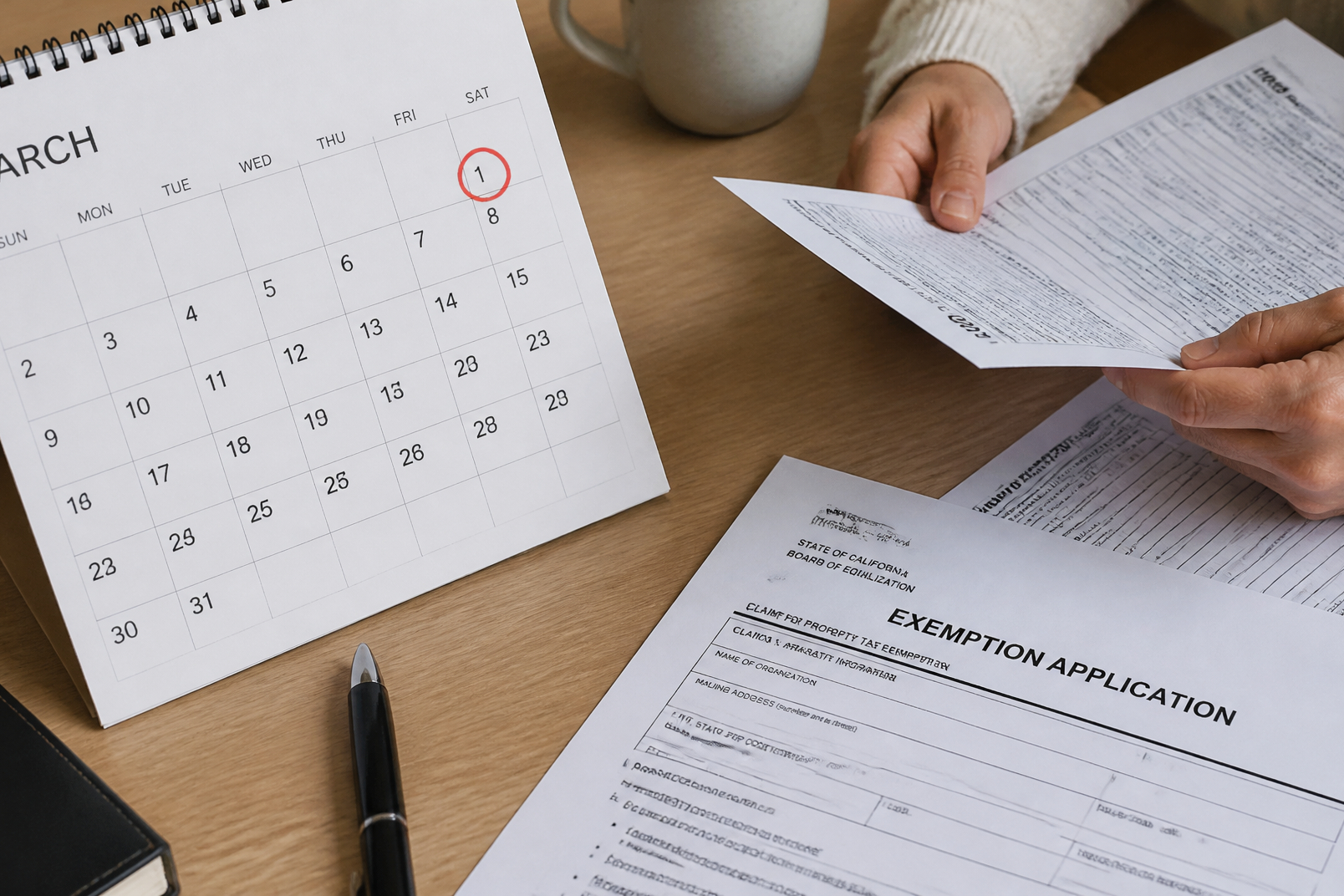
Here’s the sequence that trips up more new Florida homeowners than anything else. January 1 is the qualifying date — you must own and occupy the home as your primary residence on that specific date. The application must then be submitted to your county property appraiser’s office by March 1 of that same year, per Florida Statute §196.011.
Miss that date, and you miss the exemption entirely for that tax year. No exceptions, no partial credit.
What Happens If You Miss the Deadline
A homeowner who closed on a Florida property in October and didn’t file by the following March 1 will pay a full, unexempted property tax bill for that entire second year. The math is straightforward and painful:
- At a 1% effective tax rate, a missed $50,000 exemption costs approximately $500 for that year.
- In higher-millage counties — and some Florida counties carry effective rates approaching 1.1% to 1.2% — the annual cost of missing the deadline can reach $600 or more.
- There is no refund mechanism for the year you missed.
Pro Tip: Mark March 1 on your calendar the day you close on your Florida home. Treat it like a mortgage payment deadline — because the financial consequences of missing it are just as real.
Late Filing and Appeals
Florida law does allow for a late filing petition in certain extenuating circumstances, submitted to your county property appraiser’s office. Approval is not guaranteed, and county offices vary significantly in how they handle these requests. The far better approach is to file early and file right.
The Save Our Homes Cap — The Long-Term Benefit Most Homeowners Don’t Know About


How the Save Our Homes Cap Works
Once your homestead exemption is in place, Florida’s Save Our Homes law limits how much your home’s assessed value can increase each year. The cap — enshrined in Florida law since voters approved a constitutional amendment effective with the 1995 tax year — is set at 3% or the Consumer Price Index (CPI) change, whichever is lower.
For the 2024 tax year, the Florida Department of Revenue set the cap at the full 3% maximum because CPI exceeded that threshold. Even in a high-inflation environment, homestead property owners were insulated from larger assessment jumps that would otherwise translate directly to higher tax bills.
Why This Benefit Compounds Over Time


Here’s where the Save Our Homes cap becomes genuinely powerful. Imagine you purchase a home in Florida for $350,000. Over the next ten years, your neighborhood appreciates strongly and the market value climbs to $600,000 — not an unusual scenario in many Florida communities over the past decade.
Without the Save Our Homes cap, your taxable assessed value would reflect that full $600,000 market value. But because the cap limits annual growth to 3% or CPI — whichever is lower — your assessed value after ten years might be closer to $420,000 or even less, depending on CPI movements in any given year.
You’re paying taxes on $420,000 instead of $600,000. That’s a $180,000 difference in assessed value — which at a 1% effective rate translates to $1,800 per year in savings. And the gap keeps widening the longer you stay.
In high-appreciation Florida markets — particularly coastal counties and major metro areas — long-term homeowners routinely carry a Save Our Homes differential of well over $100,000 between their market value and their taxable assessed value. The earlier you file for the exemption, the sooner that protection clock starts running.
Portability: Taking Your Savings With You


Florida also allows homeowners to transfer up to $500,000 of their accumulated Save Our Homes benefit to a new Florida primary residence when they move. This feature, called Homestead Portability, became available statewide through a constitutional amendment approved by Florida voters in January 2008.
Portability significantly reduces the financial penalty of upsizing or downsizing within the state — you don’t start from zero on your assessed value protections when you buy your next Florida home. Portability must be applied for separately when you purchase your new Florida home, and it must be claimed within three years of leaving your previous homestead property.
Additional Exemptions Florida Homeowners May Qualify For
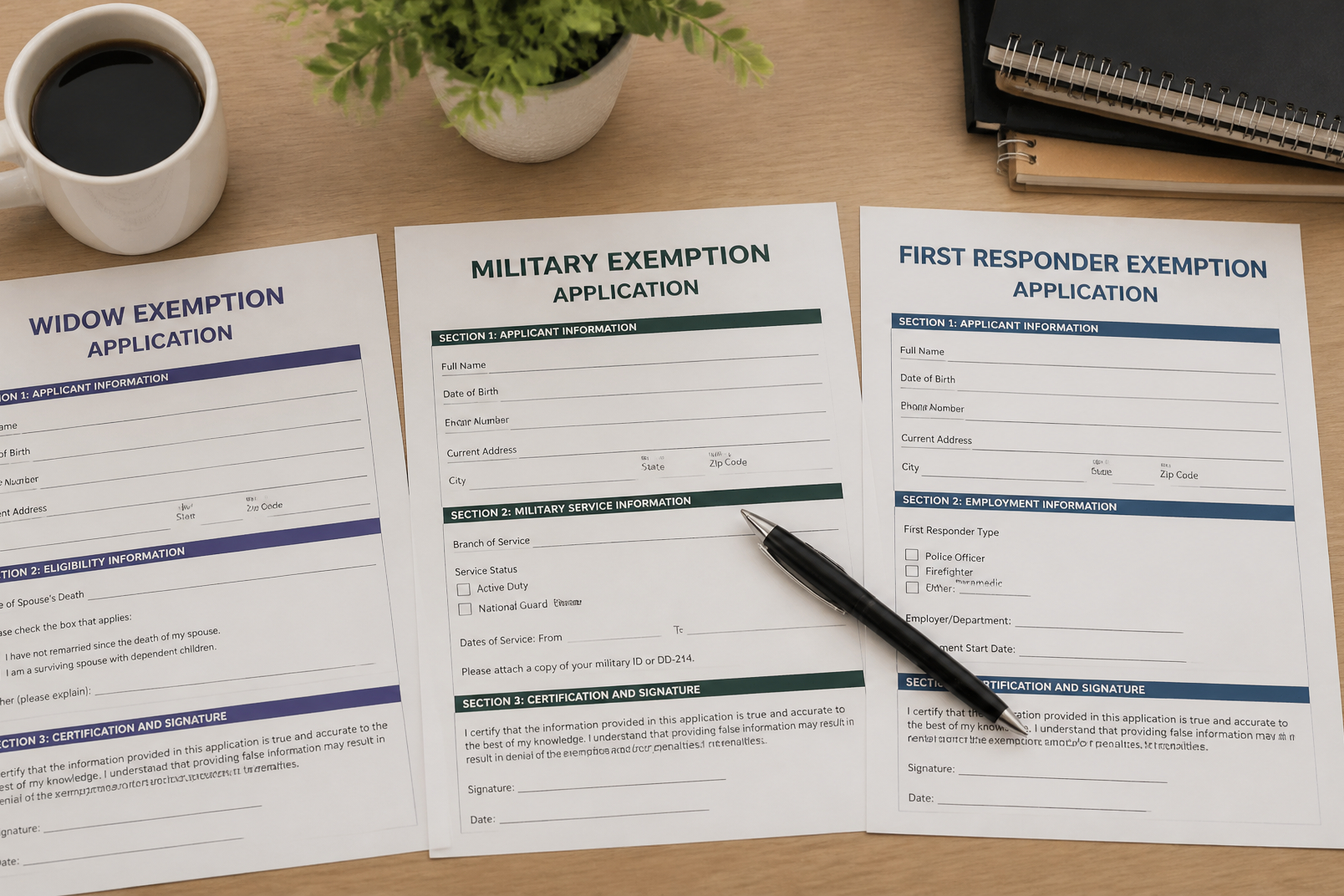

The standard $50,000 exemption is just the baseline. Florida law provides — and in some cases allows counties to adopt — a range of additional exemptions that can further reduce your annual property tax burden.
Senior Citizen Exemption
Florida homeowners who are 65 or older with a household adjusted gross income below $36,614 — the 2024 income threshold, adjusted annually by the Florida Department of Revenue — may qualify for an additional homestead exemption of up to $50,000 from county and municipal taxing authorities. This benefit is not available in every county; individual counties and municipalities must adopt it by local ordinance. A direct call or website check with your specific county property appraiser’s office will tell you whether the enhanced benefit is available where you live.
Disability and Veteran Exemptions
Florida offers meaningful additional exemptions for several groups of homeowners:
- Homeowners with total and permanent disabilities
- Individuals who are legally blind
- Surviving spouses of first responders killed in the line of duty
- Veterans with service-connected disabilities
Qualifying veterans who are totally and permanently disabled as a result of a service-connected disability are entitled to a full exemption from ad valorem property taxes on their Florida homestead — meaning the entire assessed value is exempted, not just $50,000. This is one of the most significant property tax benefits in Florida law, and one that often goes unclaimed simply because eligible homeowners don’t know it exists.
Other Exemptions Worth Knowing
Florida also provides a First Responder Exemption, a Deployed Military Exemption for active-duty service members deployed outside the country during a qualifying period, and a Widow/Widower Exemption. Many of these can stack on top of the standard homestead exemption for qualifying individuals, creating substantial combined annual savings. Because Florida law permits but does not require counties to adopt certain additional exemptions, your county property appraiser’s website is always the definitive local resource.
Pro Tip: Don’t assume you know which additional exemptions your county offers. Call or visit your county property appraiser’s website directly — some of the most valuable benefits go unclaimed simply because homeowners didn’t ask.
How to Apply for the Florida Homestead Exemption


Where to File
Applications are filed with the county property appraiser’s office in the county where your property is located. Most Florida counties — including the Miami-Dade Property Appraiser, the Orange County Property Appraiser serving the Orlando metro area, and the Hillsborough County Property Appraiser covering Tampa — now offer online filing through their websites, making the process faster and more accessible than ever. In-person and mail-in applications are also available for homeowners who prefer that route.
Documents You Will Need
Gather these before you sit down to apply:
- A Florida driver’s license or state ID showing your property address
- Florida vehicle registration (if applicable)
- Voter registration card (if applicable)
- Documentation of your closing date or recorded deed
- Green card or qualifying documentation (for permanent resident aliens)
These records allow the property appraiser’s office to verify that you are a bona fide Florida resident and that the property is genuinely your primary home — not a vacation property or investment.
After You Apply
The property appraiser’s office will review your application and notify you whether it’s approved or whether additional documentation is needed. Once approved, the exemption renews automatically each year — you do not need to reapply annually — as long as your ownership and residency status remain unchanged. If you sell the home, move, or begin using the property for a different purpose, the exemption should be removed. Continuing to claim the exemption on a property that no longer qualifies can result in back taxes, penalties, and interest under Florida law.
Frequently Asked Questions


Does the Florida Homestead Exemption apply automatically when I buy a home?
No. It must be actively applied for. New homeowners must submit an application to their county property appraiser’s office by March 1 of the applicable tax year. The exemption is never granted automatically at closing or triggered by the deed transfer.
Can I claim the Florida Homestead Exemption if I also own a home in another state?
No. The exemption is available only for your permanent primary residence in Florida. If you are currently claiming a homestead or similar property tax exemption in another state, you are ineligible until that prior exemption is formally removed and Florida is established as your sole primary state of residence.
What if I bought my home after January 1 — can I still apply for this year’s exemption?
If you closed after January 1, you would not qualify for that calendar year’s exemption, since January 1 is the qualifying date for ownership and residency. You would apply for the following year’s exemption by the following March 1. This is one reason why the timing of a Florida home purchase can affect your first year’s tax bill.
Is the Homestead Exemption the same in every Florida county?
| Exemption Type | Statewide or County-Optional | Maximum Benefit |
|---|---|---|
| Standard Homestead Exemption | Statewide (constitutional) | $50,000 reduction in assessed value |
| Senior Citizen Additional Exemption | County-optional (by local ordinance) | Up to $50,000 additional |
| Totally & Permanently Disabled Veteran | Statewide | Full ad valorem exemption |
| Deployed Military Exemption | Statewide | Varies by deployment days |
| Widow/Widower Exemption | Statewide | $500 reduction |
Your county property appraiser’s office is always the definitive source for what’s available where your property is located.
What is Homestead Portability and do I need to apply for it separately?
Yes — portability requires a separate application when you move to a new Florida primary residence. It allows you to transfer your accumulated Save Our Homes benefit — up to $500,000 — to your new home, reducing the assessed value you start with. You must apply within three years of January 1 of the year you left your previous homestead property, or the benefit is forfeited.
Can a trust or LLC claim the Florida Homestead Exemption?
Generally no, though there are narrow exceptions for certain qualifying trusts where a natural person who would otherwise be eligible holds a beneficial interest in the property. This is a nuanced area of Florida property law, and anyone holding title in a trust or corporate entity should consult a Florida real estate attorney before assuming eligibility or ineligibility either way.
The Bottom Line


Three things every new Florida homeowner should walk away knowing: the Homestead Exemption reduces your taxable home value by up to $50,000, the Save Our Homes cap protects you from runaway assessed value increases for as long as you own and occupy the home, and the March 1 deadline is firm — missing it costs real money with no easy remedy.
Florida collected approximately $43.6 billion in total property tax revenue in fiscal year 2022–2023 — the single largest source of local government revenue in the state. The Homestead Exemption was specifically designed to carve out meaningful, constitutionally protected relief for primary homeowners within that system.
Applying is free. The process is straightforward at every county property appraiser’s office across Florida’s 67 counties. The financial payoff starts in your first year and compounds every year after that. Taking advantage of it isn’t a technicality — it’s one of the smartest financial moves available to any Florida homeowner, and it starts with a single application filed before March 1.
If you have questions about buying a home in Florida or want to explore communities where you can put these benefits to work right away, reach out to our team — we’re happy to help you find the right fit.