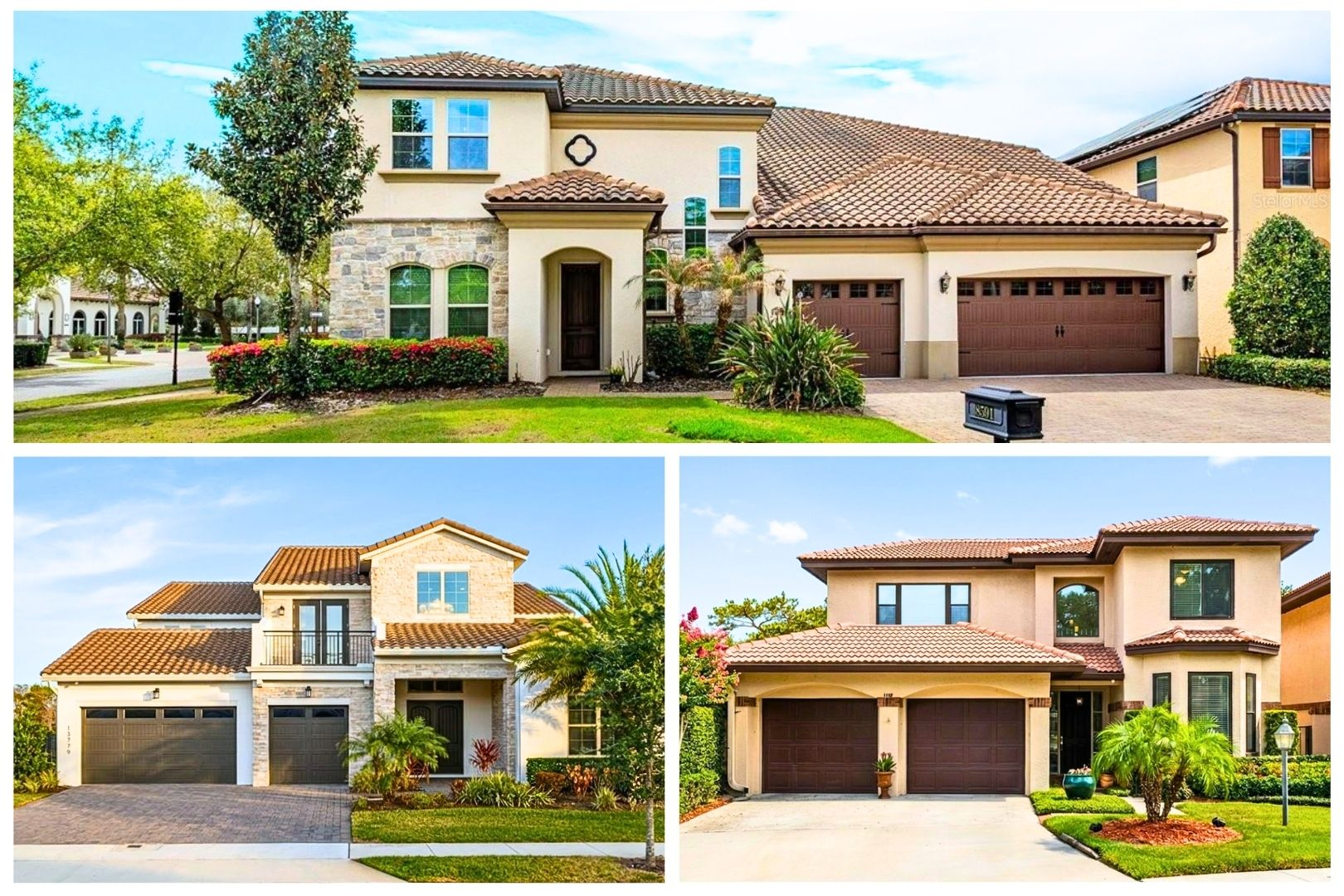

Greater Orlando’s housing market in May 2026 is not the bidding-war frenzy of 2021–2022 — and it’s not the correction that national headlines keep predicting, either. It’s something more consequential: a market in the middle of a meaningful recalibration, where the rules of engagement have changed but the underlying demand that makes Central Florida one of the most resilient housing markets in the Sun Belt remains firmly intact.
In this month’s snapshot, we’re breaking things down into three honest chapters: what’s selling fast, what’s sitting longer than sellers expected, and what’s shifting beneath the surface that every buyer and seller in Greater Orlando needs to understand heading into summer. Real numbers, real neighborhood context, real takeaways — not national headlines loosely applied to Orlando.
The State of Greater Orlando Real Estate Heading Into May 2026
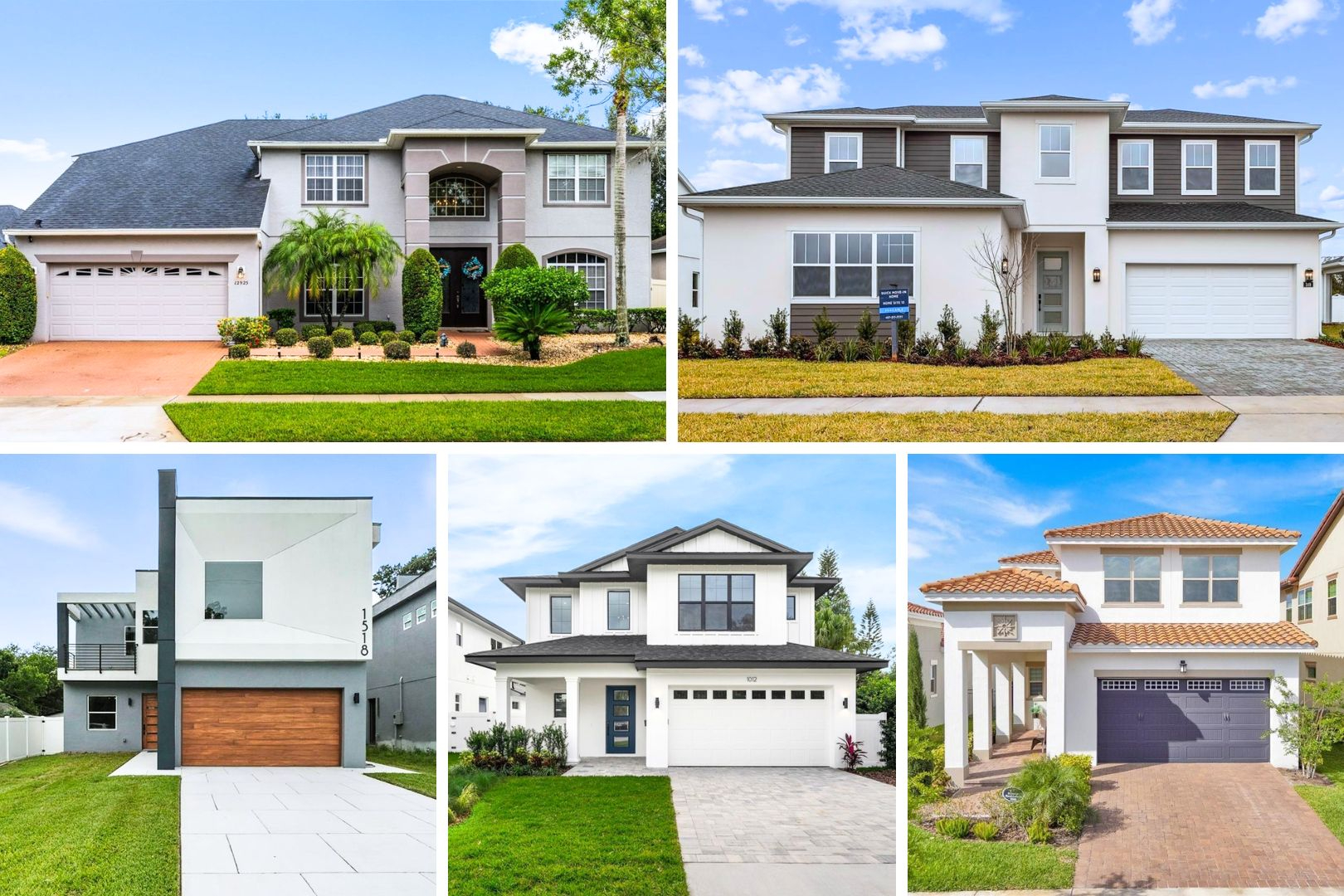

To understand where we are in May 2026, it helps to trace the arc of the past year. Since mid-2025, Greater Orlando has seen a gradual but steady increase in active inventory — a meaningful departure from the historic supply lows that defined 2021 through early 2023. Buyers frozen out or burned out during those years have slowly re-entered the market, and sellers who held back hoping for another demand surge have begun listing.
The result is a more balanced environment than this metro has seen in several years. Median home prices across the Orlando metro — spanning Orange, Seminole, and Osceola counties — have held relatively firm.
$385,000–$390,000 — the metro’s median sale price for single-family homes as of Q1 2025, with year-over-year appreciation running well below the double-digit gains of the pandemic years.
This is a market finding its floor, not falling through one.
3.0 to 3.5 months of supply — where Greater Orlando sits today, with approximately 7,500–9,000 active listings metro-wide, compared to under one month at the 2022 peak.
A fully balanced market sits at five to six months of supply. Orlando still leans slightly toward sellers in the most in-demand segments while giving buyers substantially more leverage than they’ve had in years.
What continues to underpin this demand is Central Florida’s structural economic story. The Greater Orlando metro’s unemployment rate was approximately 3.5%–3.7% for the Orlando–Kissimmee–Sanford MSA as of early 2025, consistent with a broadly healthy regional labor market. The Lake Nona Medical City corridor remains a significant economic anchor, drawing healthcare and research professionals from across the country — recognized by the Orlando Economic Partnership as one of the metro’s most consequential growth engines.
Add the UCF Research Park, aerospace and defense employers, and a hospitality sector anchored by Walt Disney World and Universal Orlando Resort, and you have an employment base that keeps drawing residents from higher-cost states regardless of rate cycles.
What’s Selling — The Homes Moving Fast in Orlando Right Now


Price Points With the Most Activity
The most active price band in Greater Orlando right now is the sub-$400,000 segment, where first-time buyers, relocating renters converting to ownership, and downsizers are all converging on limited well-priced inventory. Homes in this range that are priced accurately and presented well are still seeing brisk activity.
97.0–97.5% — the current list-to-sale price ratio for well-priced homes in the sub-$400,000 range, meaning buyers are negotiating modest discounts rather than overbidding, but move-in-ready homes are not sitting.
The move-up segment from $400,000 to $600,000 remains active but has softened slightly. Buyers in this range are taking more time and requesting more concessions than they did two years ago — a shift sellers need to factor into their strategy from day one.
Neighborhoods and Submarkets Leading Sales Activity
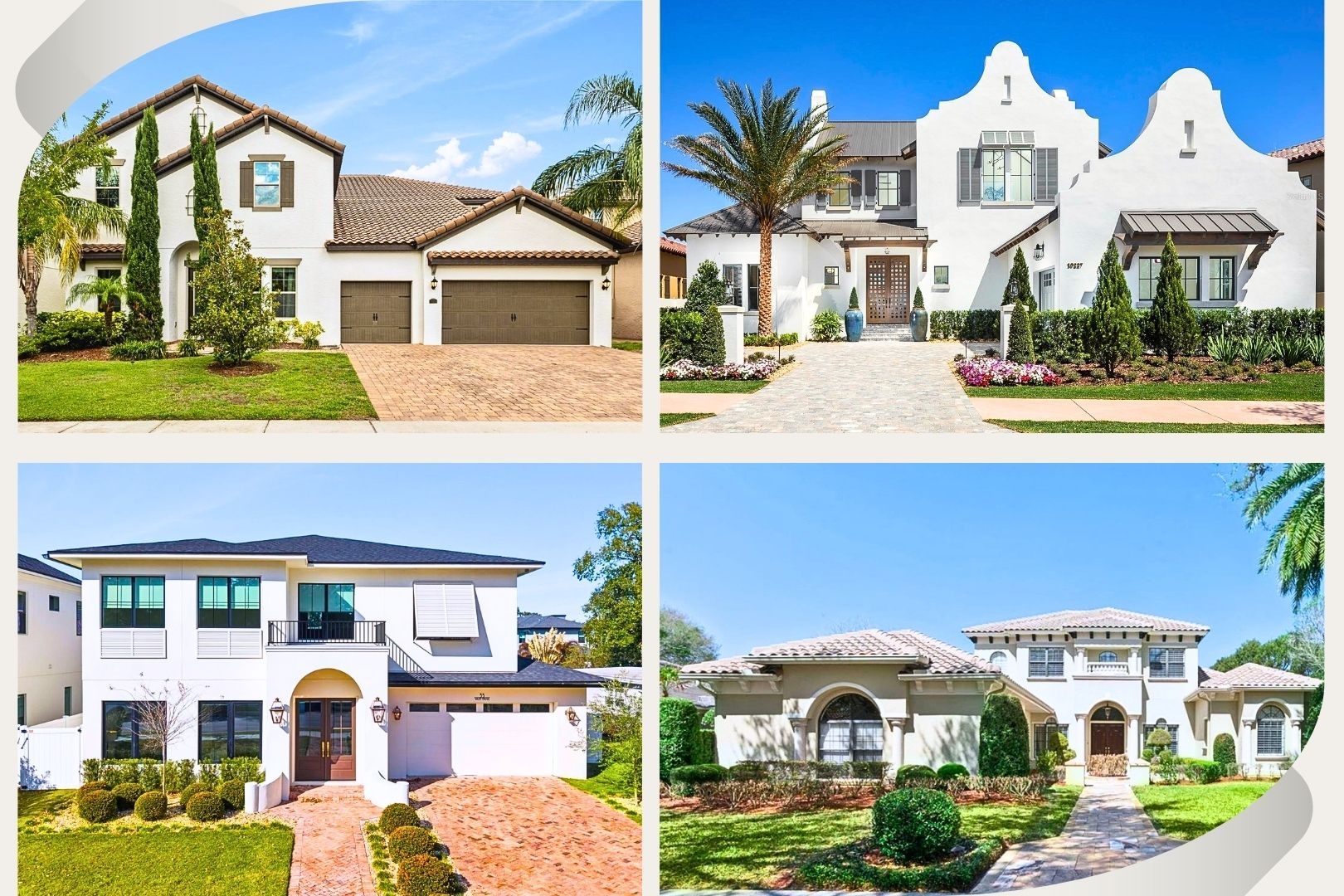

Lake Nona continues to be one of the most consistent performers in the metro, driven by its master-planned infrastructure, Medical City employment anchor, and highly rated schools. Families and healthcare professionals relocating to Orlando frequently target this submarket first, and absorption rates reflect that sustained demand. Laureate Park and Storey Park within Lake Nona continue to see strong interest in both resale and new construction product.
Winter Garden and the broader Horizon West corridor in western Orange County remain strong. Families prioritizing school quality and community character are drawn to this area, where Orange County Public Schools — the 10th largest school district in the United States with approximately 218,000–220,000 students — offers well-regarded programs at the community level.
Oviedo in Seminole County tells a similar story. Seminole County Public Schools has consistently earned an A-district designation from the Florida Department of Education, making it one of the top-rated districts in the state and a primary driver of buyer demand in that submarket. For value-driven buyers priced out of core Orange County, Kissimmee and St. Cloud in Osceola County are generating real transaction volume, particularly in newer townhome and single-family communities. Sanford, in northern Seminole County, is similarly active as buyers spread outward in search of inventory at accessible price points.
Property Types in Demand
Single-family detached homes remain the dominant preference among Greater Orlando buyers, particularly families and remote workers who prioritize space. Townhomes, however, have carved out a meaningful share of demand in more walkable communities.
In neighborhoods like Baldwin Park, Thornton Park, and College Park — all of which draw buyers who want proximity to Lake Eola Park, the weekend farmers market, and Orlando’s independent dining scene — lower-maintenance attached product appeals strongly to young professionals and remote workers who prize location over square footage.
What’s Sitting — The Listings Accumulating Days on Market

The Overpriced Listing Problem
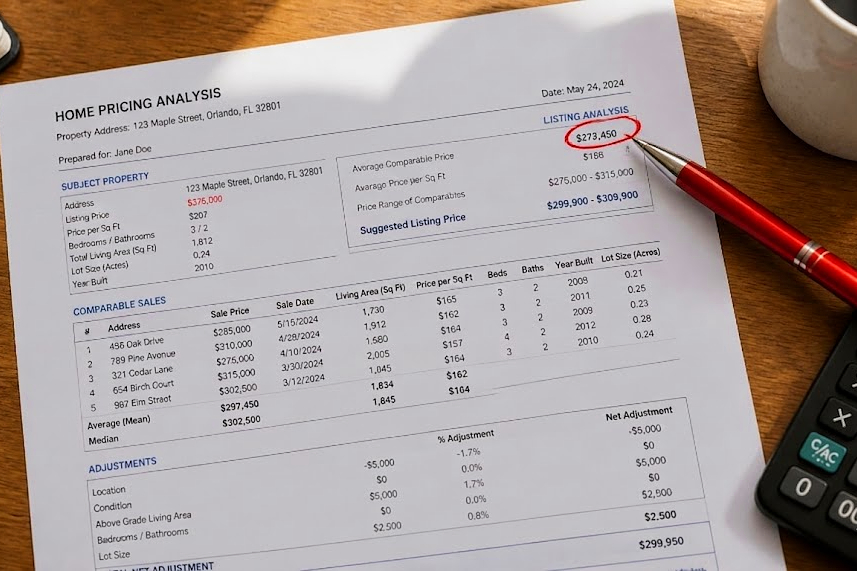
The most consistent predictor of a listing sitting in Greater Orlando’s current market is overpricing. Today’s Orlando buyers are researching more carefully, requesting inspections, and walking away from listings where the numbers don’t hold up — rather than competing in a panic.
47 days — the metro’s median days on market as of early 2025, up from 28–30 days during the 2022 peak. That gap widens considerably for listings that launched above comparable sales.
ORRA and Stellar MLS market tracking data indicate that a meaningful share of active listings in the Orlando metro have carried at least one price reduction in recent reporting periods. Sellers are recalibrating expectations rather than receiving immediate offers. A well-priced listing from launch outperforms a price-reduced listing every time — even when the ultimate sale price appears similar.
Condo and HOA-Heavy Product Facing Headwinds
Condominiums — particularly older stock or units carrying elevated HOA fees — are among the softer-performing product types in the current market. Florida homeowners insurance premiums saw dramatic increases between 2021 and 2024, with the Florida Office of Insurance Regulation documenting significant statewide rate pressure across carriers during this period.
For condos specifically, the 2023 Florida condo safety legislation imposed new reserve funding and structural inspection requirements on associations. In older buildings with substantial deferred reserve requirements, the cost impact has added meaningfully to monthly ownership expenses — a factor buyers are incorporating carefully into their affordability calculations. The Downtown Orlando condo corridor and certain resort-adjacent communities in Kissimmee are areas where this friction is most visible in days-on-market data.
Higher Price Tiers Requiring More Time and Patience
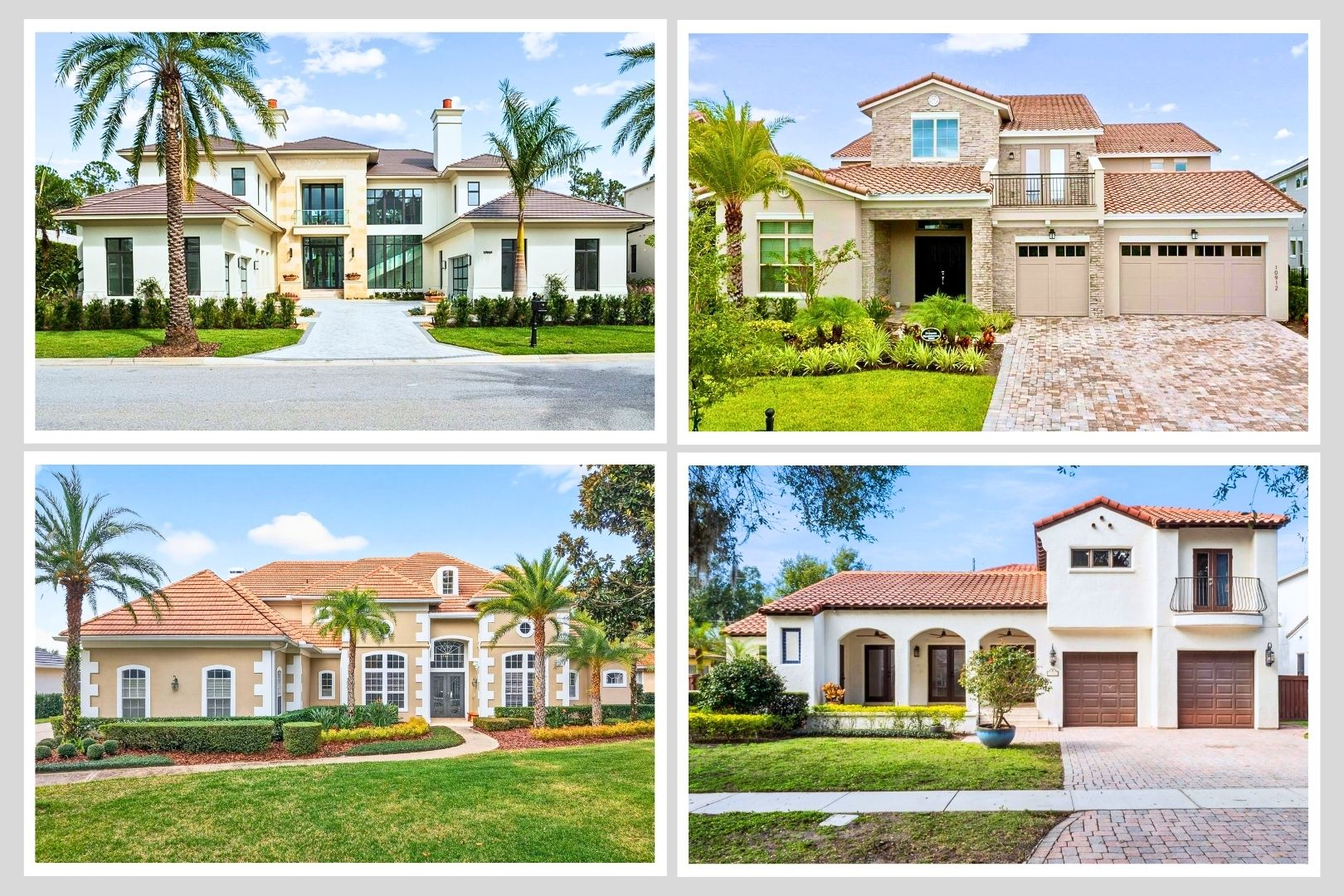

Luxury and upper-tier inventory — homes priced at $800,000 and above in communities like Isleworth, Windermere, Dr. Phillips, and Lake Butler Sound — is experiencing longer marketing periods that represent a normalization, not a collapse. The buyer pool at this price point has always been smaller and more deliberate.
Sellers who entered the market with 2022-era expectations have been recalibrating. Those who’ve worked to align pricing with current comparable data are still closing transactions — just with longer timelines and more negotiation than prior years required.
Pro Tip: If you’re selling a luxury property in Windermere or Dr. Phillips, lead with a fresh comparative market analysis rather than last year’s comps. Even a six-month-old pricing benchmark can misrepresent where today’s buyers are drawing the line.
What’s Shifting — The Trends Reshaping Orlando’s Market in 2026

Inventory Is Up — And That Changes Everything
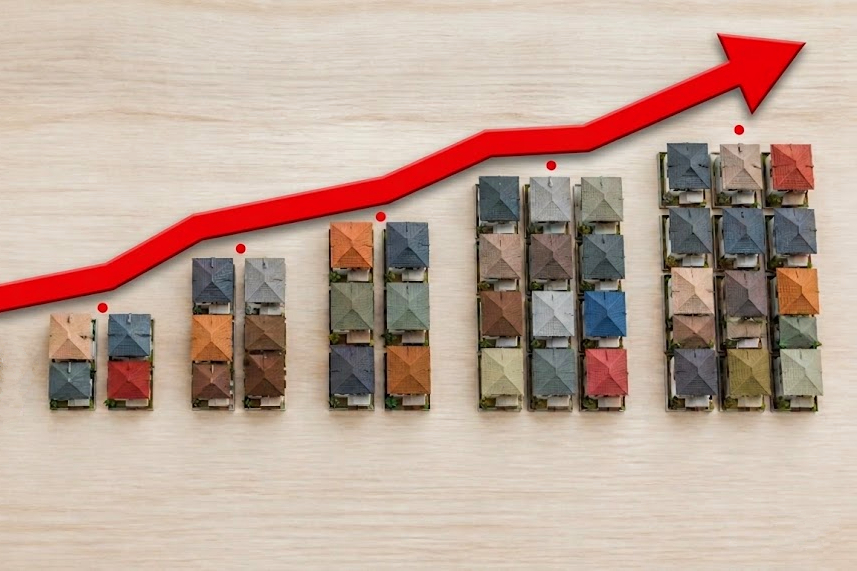
The single most consequential shift in the Greater Orlando market over the past 12–18 months has been the expansion of active inventory. When compared to May 2024 figures, active listings across the metro are meaningfully higher, and that shift in the supply-demand equation has downstream effects on every aspect of the transaction.
Buyers now have longer decision windows. Contingencies — financing, inspection, appraisal — have returned to common use after years of being waived in competitive bidding situations. Sellers are fielding fewer multiple-offer situations and more single-buyer negotiations. This is not a bad market; it’s a more normal one, and prepared buyers have real leverage they didn’t have 24–36 months ago.
Interest Rate Sensitivity and How Orlando Buyers Are Adapting
Mortgage rates remain a defining factor in buyer behavior across Greater Orlando. According to Freddie Mac’s Primary Mortgage Market Survey, the 30-year fixed rate averaged 6.81% for the week of April 24, 2025, with rates ranging between approximately 6.5% and 7.2% throughout 2024 and into 2025. Even a 0.5% shift in rate on a $415,000 home translates to a meaningful monthly payment difference that buyers are acutely aware of.
The market has adapted. Mortgage rate buydowns — both permanent and temporary — have become standard negotiating tools. Builders in communities like Laureate Park in Lake Nona, Storey Park, and Horizon West developments are offering below-market rate incentives as a core sales strategy, and resale sellers are increasingly contributing closing cost assistance and rate buydown credits to compete.
With a median household income in the Orlando–Kissimmee–Sanford MSA of approximately $63,000–$65,000 per year and median home prices approaching $415,000, the affordability equation remains tight for locally-rooted buyers — making every rate point and every seller concession matter.
Pro Tip: Ask your lender to run a side-by-side comparison of a temporary 2-1 buydown versus a permanent rate buydown on your target price range. In Orlando’s current market, seller-funded buydowns are negotiable — and the monthly payment difference can be significant.
Migration and Employment Continue to Drive Underlying Demand
Central Florida’s population growth story hasn’t changed in any fundamental way.
2.76 million — the estimated population of the Orlando–Kissimmee–Sanford MSA as of the U.S. Census Bureau’s July 2023 estimate, growing at roughly 2.1% annually between 2020 and 2023 and placing it among the fastest-growing large metros in the country.
The metro has ranked among the leaders in the U.S. for net domestic in-migration, drawing buyers primarily from the New York metro area, South Florida, and other northeastern metros. Florida’s lack of state income tax — representing meaningful annual savings for households relocating from states with income tax rates of 5–7%, which can translate to several thousand dollars per year for a household earning $65,000–$90,000 — remains a powerful pull factor. Orlando is not facing a demand collapse; it’s experiencing the normalization that follows any extraordinary surge.
New Construction vs. Resale — A Battle for Buyer Attention
The Greater Orlando metro issued approximately 14,000–16,000 new single-family building permits annually in 2023–2024, ranking it among the top markets in the nation for single-family construction. Communities in Horizon West, Lake Nona, and the Sanford/Lake Mary growth corridor accounted for a disproportionate share of that volume.
Builders are incentivizing aggressively. What they’re offering that resale simply can’t match feature-for-feature:
- Below-market mortgage rate buydowns as a core sales tool, not an afterthought
- Design center credits ranging from flooring and cabinetry upgrades to appliance packages
- Closing cost contributions that meaningfully reduce cash-to-close requirements
- Structural and systems warranties that transfer with the home
Resale sellers who succeed in this environment are those who’ve accepted that competition and responded with competitive pricing, strong presentation, and meaningful concessions. For buyers, this builder-versus-resale dynamic is a genuine advantage — and one worth fully understanding before making an offer in any of these growth corridors.
What This Means If You’re Buying or Selling in Orlando Right Now
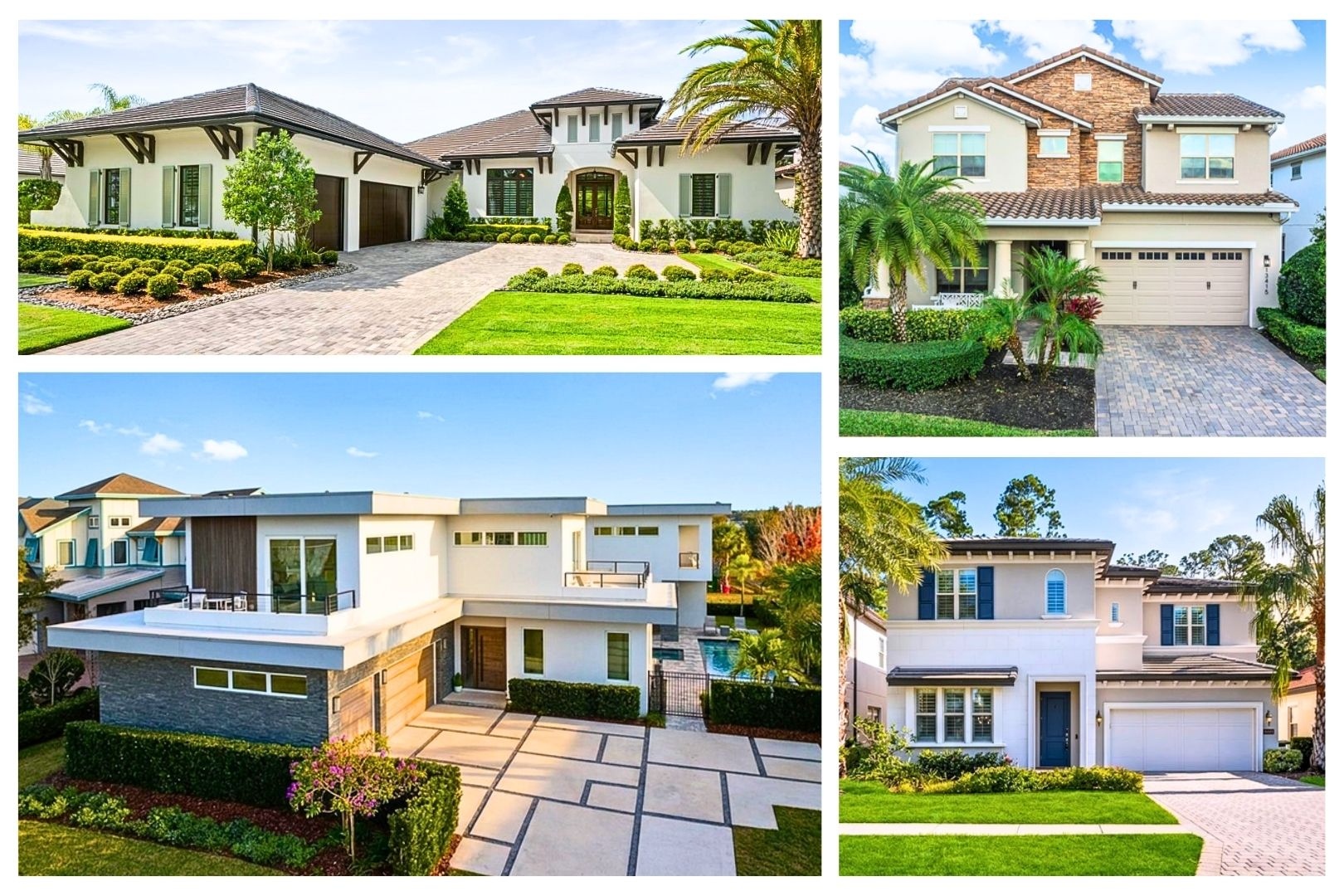

Advice for Orlando Home Sellers in May 2026
The single most important thing a seller can do in Greater Orlando’s current market is price the home accurately from day one. Overpriced listings are not being corrected by competitive buyer behavior the way they once were — they’re accumulating days on market and becoming stigmatized in the eyes of buyers doing thorough research.
Beyond pricing, condition matters more than it did during the seller’s market peak. Buyers have options now, and a home showing obvious deferred maintenance or cosmetic neglect will face objections that a well-presented listing won’t. Strategic concessions — seller-paid rate buydowns, closing cost contributions, or repair credits — have become effective tools for bridging the gap between buyer hesitation and a closed transaction.
Advice for Orlando Home Buyers in May 2026


Buyers in Greater Orlando in May 2026 are in a materially better negotiating position than they’ve been in years. More inventory means more options, more time for thoughtful decisions, and more room to negotiate on price, contingencies, and seller contributions.
Getting pre-approved and understanding your true purchasing power in the current rate environment is essential before beginning a search. Understand what a rate buydown does to your monthly payment and whether new construction incentives make that product financially competitive with resale in your target submarket. Well-located, well-priced homes in strong Central Florida communities are not waiting indefinitely — the structural demand drivers described throughout this report are real. The opportunity is genuine, but preparation determines who captures it.
Frequently Asked Questions About the Greater Orlando Housing Market in 2026
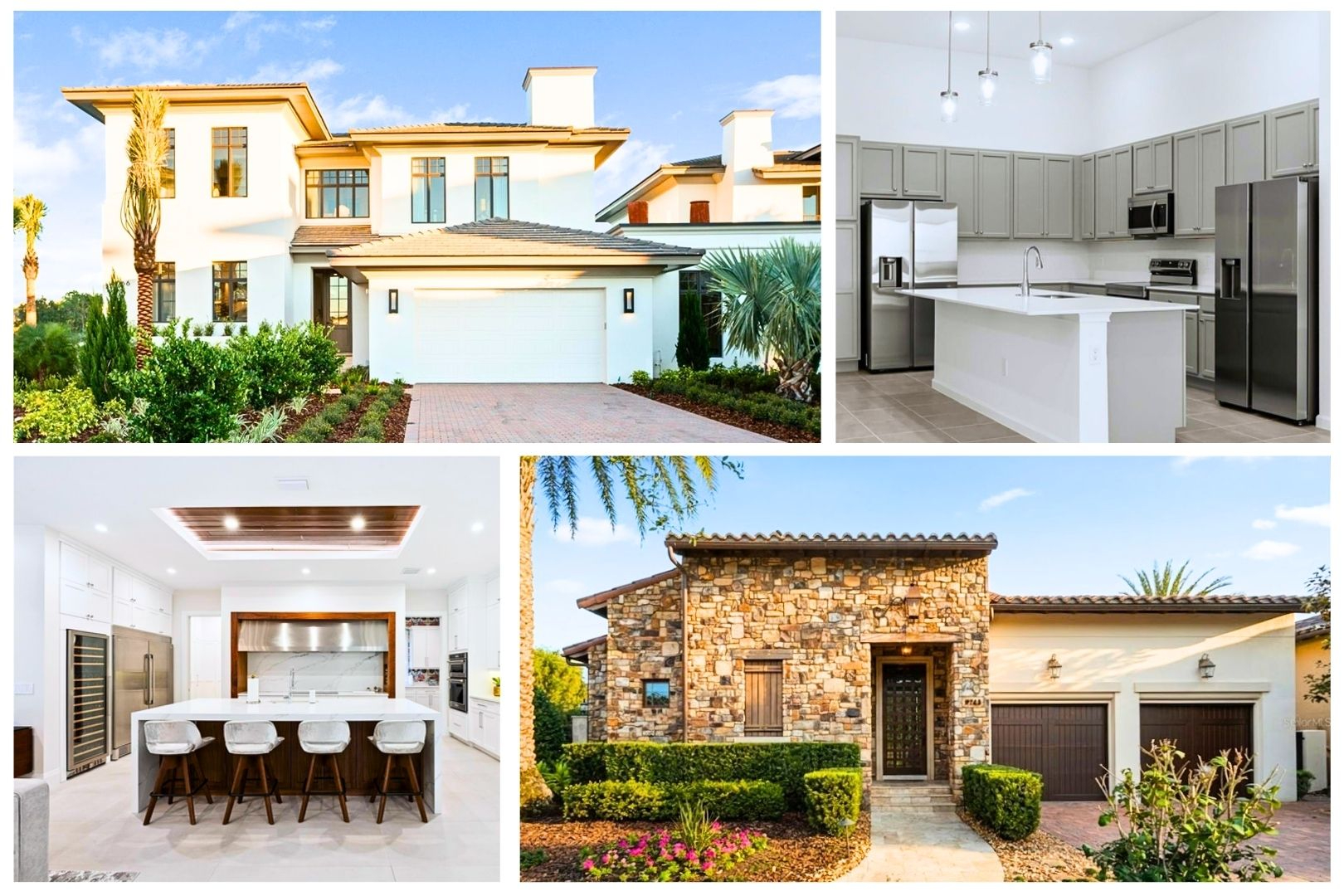

Is the Orlando housing market a buyer’s or seller’s market in May 2026?
The answer depends on where you’re looking and at what price. The market is trending toward balance overall, but conditions are not uniform. A useful way to think about it:
| Submarket / Segment | Current Conditions |
|---|---|
| Below $400K in Oviedo, Winter Garden | Favors sellers — limited well-priced inventory |
| Lake Nona (most price bands) | Competitive — employment and amenity demand sustained |
| $600K–$800K+ | Shifting toward buyers — longer timelines, more negotiation |
| Condo segment (older stock, high HOA) | Favors buyers — insurance and reserve costs adding friction |
| Kissimmee / St. Cloud | Balanced to slightly buyer-friendly at accessible price points |
Think of it as a market of micro-conditions rather than a single blanket verdict.
Are home prices dropping in Orlando in 2026?
Prices have moderated but have not broadly declined. Appreciation has slowed significantly from the double-digit gains of 2021–2022, and overpriced listings are seeing reductions — but those reductions reflect corrections to market value, not market-wide decline. The overall median for the Orlando metro has remained relatively firm, supported by the structural demand factors detailed throughout this report. Measured, submarket-specific price behavior is what’s happening here, not the dramatic story that makes for sensational headlines.
How long does it take to sell a house in Orlando right now?
There is significantly more variation than the market has seen in recent years. A well-priced single-family home under $400,000 in Oviedo, Winter Garden, or Lake Nona can still move within two to three weeks. A home in the $600,000–$800,000 range that launched above comparable sales might sit 60–90 days before a price reduction prompts renewed activity. Condition, pricing accuracy, and location drive days-on-market outcomes more than any single macro factor.
What are the best neighborhoods to buy in Orlando in 2026?
It genuinely depends on your priorities. Lake Nona delivers master-planned amenities, Medical City employment access, and strong resale dynamics. Winter Garden and Oviedo are the go-to choices for families prioritizing top-rated school districts. Baldwin Park and College Park appeal to buyers who want walkability, neighborhood character, and easy access to cultural anchors like the Dr. Phillips Center for the Performing Arts and Harry P. Leu Gardens. Kissimmee and St. Cloud offer growth potential and accessible price points for buyers priced out of Orange County’s core. Each submarket has a distinct value proposition worth understanding before committing.
Is it a good time to sell my home in Greater Orlando?
Yes — with realistic expectations. Sellers who price competitively, present their homes well, and approach the process strategically are closing transactions and capturing meaningful equity. The era of listing any home at any price and receiving instant multiple offers is largely behind us. A strategic seller in Greater Orlando in May 2026 is not facing a hostile market — they’re facing a normalized one that rewards preparation and penalizes overconfidence.
How is new construction affecting Orlando’s resale market in 2026?
Meaningfully. Builder incentives — particularly rate buydowns and closing cost credits — have made new construction a compelling alternative for buyers who might otherwise gravitate toward resale. Resale sellers in growth corridors like Horizon West, Lake Nona, and Sanford are feeling this competition most directly. The successful response from resale sellers has been to compete on condition, price, and seller-paid concessions rather than ignore the pressure. Buyers benefit directly from this dynamic — it’s one of the strongest arguments for being a buyer in the current Greater Orlando market.
Your Next Move in the Greater Orlando Market

May 2026 tells a clear story for anyone willing to read it carefully. The homes selling fastest in Greater Orlando are well-priced, well-located, and well-presented — winning on the fundamentals. The listings sitting are those fighting the data: overpriced, under-prepared, or in segments where buyer sentiment has shifted in ways that require honest acknowledgment.
The broader shift underway — more inventory, rate adaptation, builder competition, and a market recalibrating toward balance — creates genuine opportunity for both informed buyers and strategic sellers who understand the new rules of engagement. This is a market that rewards preparation, local knowledge, and realistic expectations.
The data is your compass; the neighborhoods, schools, employers, and community character of Central Florida are the reason the destination remains worth pursuing. Ready to make a move or just beginning to explore your options? Reach out — we’re here to help you navigate Greater Orlando’s market with clarity and confidence.