
Osceola County sits at the center of one of the most visited tourism destinations on the planet — and the regulatory rules governing vacation rentals here are just as layered as the market is lucrative. With Walt Disney World straddling its northern border and the US-192 vacation corridor running through the heart of Kissimmee, this county welcomes tens of millions of visitors every year, all of whom need somewhere to stay.
That sustained demand has made Osceola County a magnet for short-term rental investors from across the country and around the world. But the same tourism engine that makes this market so attractive also creates an evolving regulatory environment that has caught unprepared investors off guard. This is the due diligence roadmap every investor needs before making an offer on any short-term rental property in Osceola County in 2026.
Why Osceola County Is One of the Top STR Investment Markets in Florida

The Tourism Engine That Drives Demand
The numbers behind Osceola County’s tourism economy illustrate why investor demand remains high. The broader Orlando metro — anchored by Walt Disney World Resort, which sits directly on the Osceola-Orange County border — drew more than 70 million visitors in 2023, making it the most visited tourist destination in the United States, according to Visit Orlando’s 2023 Annual Destination Report. Kissimmee captures a substantial share of that traffic, particularly from international and family travelers seeking extended stays with kitchen and pool access that hotels simply can’t provide.
70 million+ visitors passed through the Orlando metro in 2023 — making it the most visited tourist destination in the entire United States. Kissimmee and the US-192 corridor capture a significant share of that demand.
That consistent guest pipeline is the foundation of the STR investment thesis here. Attractions like Walt Disney World, Old Town Kissimmee, the entertainment district along US-192, and Kissimmee Lakefront Park on Lake Tohopekaliga give visitors ample reason to stay multiple nights — which translates directly into occupancy demand for well-positioned vacation rentals. Osceola County also consistently ranks among the top three to five Florida counties by total number of licensed vacation rental units, according to Florida DBPR licensing data, underscoring just how mature and established this STR market has become.
Key Communities Driving STR Investment
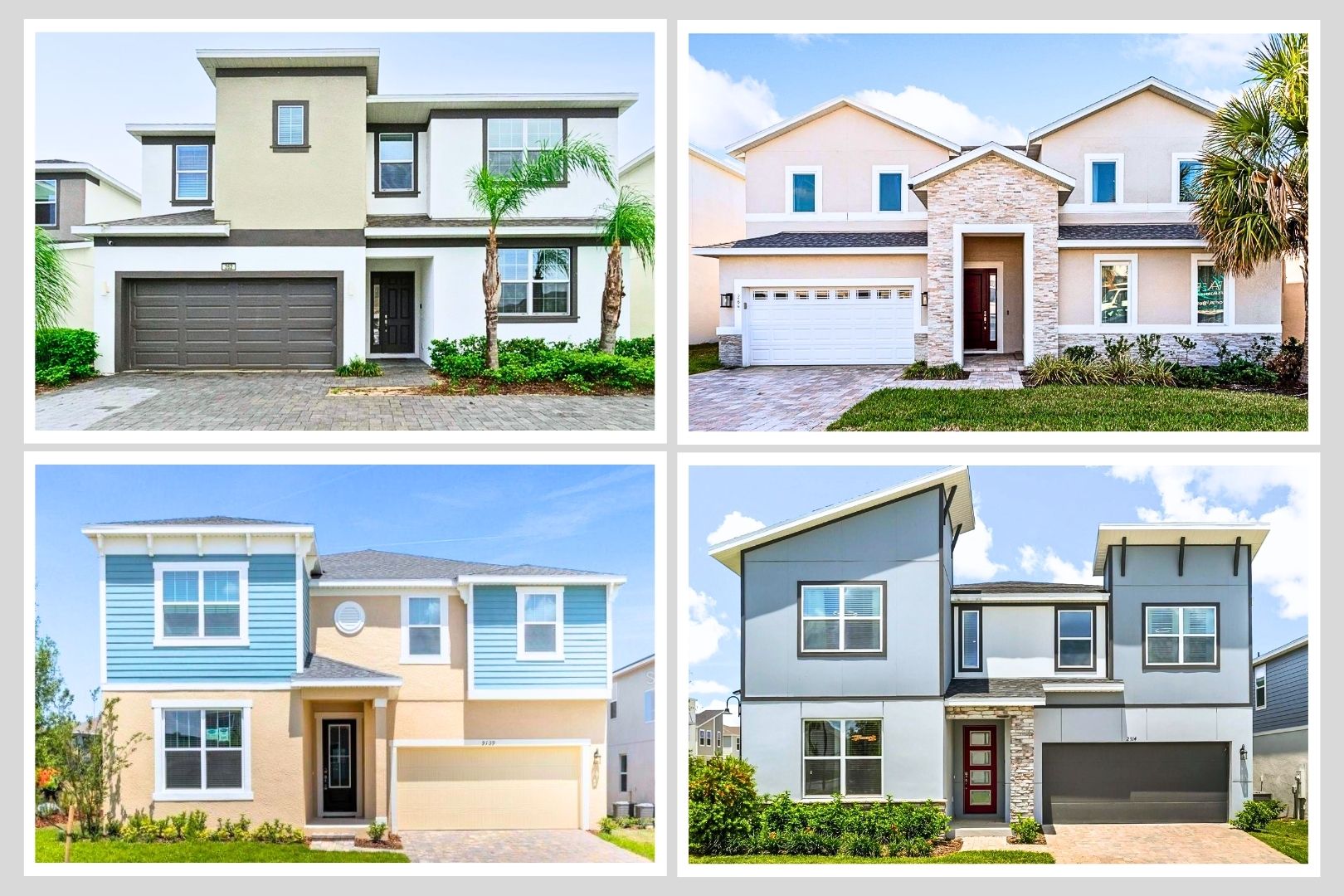
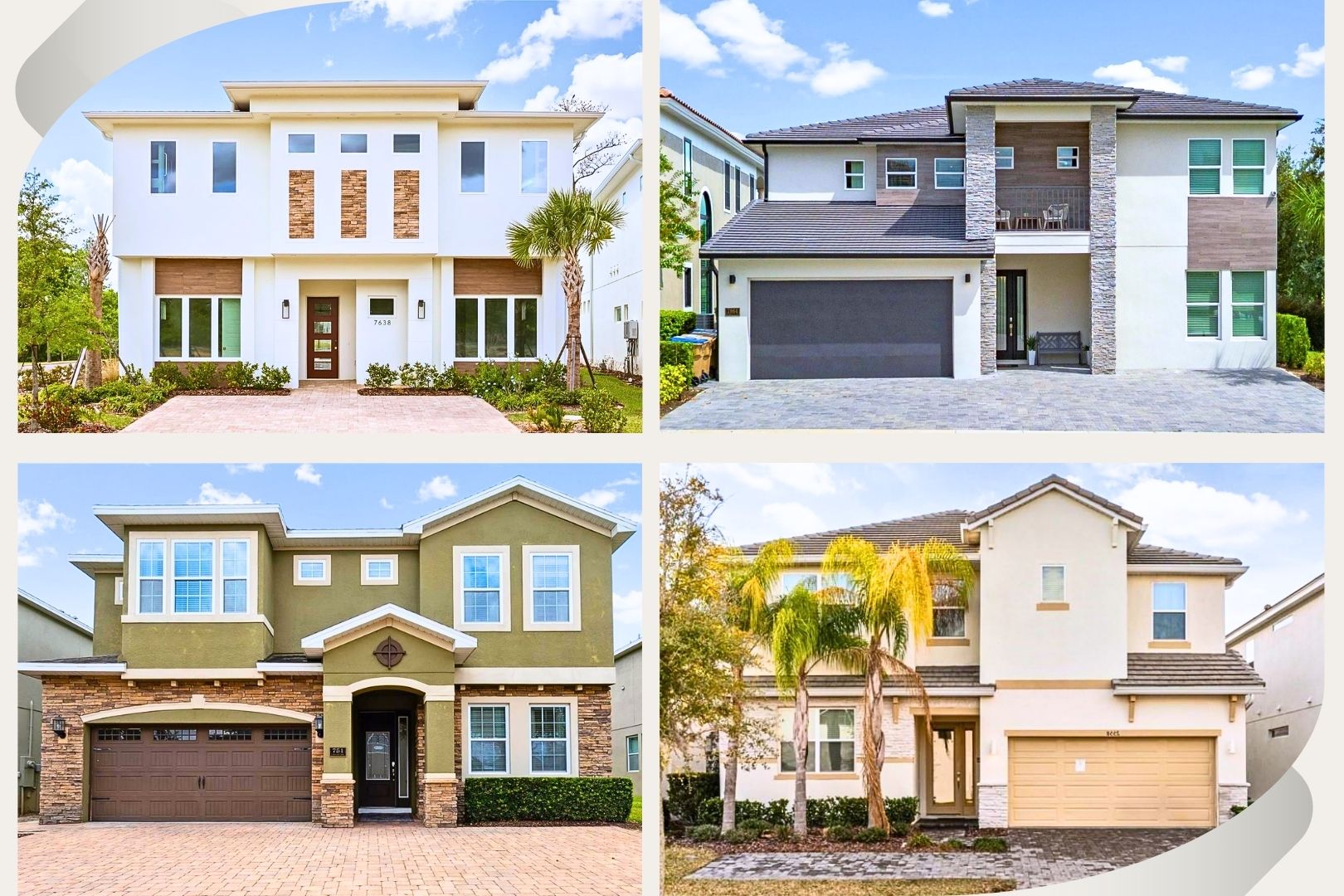
The communities generating the most investor interest in Osceola County are not typical residential subdivisions. These communities were purpose-built for vacation rental use — conceived, zoned, and governed with short-term rental activity as an intended outcome:
- Reunion Resort and Golf Club
- Champions Gate Resort
- Storey Lake Resort
- Solterra Resort
- Windsor at Westside
- Bella Vida Resort
These communities surround guests with resort-style amenities like lazy rivers, clubhouses, and concierge services — which supports premium nightly rates. Median residential sale prices in Osceola County were running approximately $355,000 to $375,000 as of mid-2024, per Florida Realtors market data, though purpose-built resort community properties frequently trade at higher per-unit prices than the general county residential stock.
The critical nuance is that “purpose-built” does not mean “unregulated.” Every layer of the regulatory stack — state law, county zoning, and HOA governing documents — applies in these communities, and investors who skip any layer of verification have discovered compliance problems that were entirely avoidable with proper due diligence.
Understanding Florida’s State Preemption Law and What It Means for Osceola Investors


Florida Statute 509.032 — The Preemption Framework
Florida is one of the few states with a formal preemption statute that significantly limits a local government’s ability to ban vacation rentals outright. Florida Statute §509.032(7) establishes that a county or municipality generally cannot enact ordinances that prohibit vacation rentals which were operating lawfully before local regulations were enacted. This has been a meaningful protection for existing STR operators across the state, including in Osceola County.
The statute has been amended in 2011, 2014, 2021, and again in 2024 — and the balance between state preemption and local control has shifted with each revision. Under the current framework, local governments retain meaningful regulatory authority. They can impose registration requirements, inspection mandates, noise and parking restrictions, and in some contexts density-related regulations, provided those rules are regulatory in nature rather than operating as a de facto prohibition.
Investors pursuing a 2026 purchase should verify the current statute status directly, as the Florida Legislature continues to revisit this issue. This blog is for informational purposes only and does not constitute legal advice. Consult a qualified Florida real estate attorney for current regulatory interpretation before purchasing any property.
What State Preemption Does NOT Protect Against
State preemption is frequently misunderstood as a blanket green light for STR activity anywhere in Florida. It is not. Here’s what preemption leaves fully intact:
- HOA and CDD restrictions — private legal agreements that exist entirely outside the preemption framework. An HOA can prohibit short-term rentals regardless of what the statute says.
- Local registration and licensing requirements that are genuinely regulatory remain fully enforceable.
- Zoning classifications that predate preemption protections may impose limitations the statute does not override.
- Tax remittance obligations at the county and state level are completely unaffected by preemption.
Knowing what the statute protects — and what it does not — is the starting point for any sound STR investment strategy in Osceola County.
Osceola County’s Local STR Regulations — What You Need to Verify Before You Buy
County-Level Licensing and Registration Requirements
Every vacation rental property in Florida must obtain a license from the Florida Department of Business and Professional Regulation (DBPR) before advertising or renting for periods of less than 30 days. No exceptions. As of 2024, the DBPR vacation rental license fee is $155 for the initial application and $155 for annual renewal, according to the DBPR Division of Hotels and Restaurants fee schedule. The license must be renewed annually and displayed on all advertising, including any listing on Airbnb or VRBO.
Pro Tip: Don’t wait until after closing to start your DBPR application. Build the licensing and registration timeline into your pre-closing schedule as a deliberate step. Delays in getting licensed mean delays in getting your listing live — and a vacant property is a carrying cost with no offset.
Beyond the state DBPR license, contact the Osceola County Growth Management Department directly to confirm whether any local registration or permitting layer applies in addition to the state license. Osceola County Code Compliance handles enforcement of local STR regulations, and operating without proper registration can result in fines and a mandated stop of rental activity. Verify both layers — state and county — before closing, not after.
Zoning Designations That Allow or Restrict STRs
Not every residential parcel in Osceola County is zoned to permit short-term rental activity. Standard residential zoning designations — R-1, R-2, and similar classifications — may treat nightly rentals as a commercial use that is not permitted in a residential zone. Purpose-built resort communities carry different zoning designations that explicitly anticipate vacation rental use, which is one of the structural advantages of buying within established resort corridors rather than in a general residential neighborhood.
Investors must pull the specific zoning classification for any property under consideration and confirm that STR use is listed as a permitted use within that classification. The Osceola County Zoning Division can confirm zoning status, and requesting a formal zoning verification letter as part of your due diligence package is strongly advisable. Do not rely solely on a listing agent’s representation — pull the zoning documentation directly from the county.
Tax Obligations — Tourist Development Tax and Sales Tax
Short-term rentals in Osceola County carry a meaningful combined tax obligation. Here’s how it breaks down at current rates:
| Tax Type | Rate | Remitting Authority |
|---|---|---|
| Florida State Sales Tax | 6% | Florida Department of Revenue |
| Osceola County Tourist Development Tax (TDT) | ~6% | Osceola County Tax Collector |
| Combined Estimated Rate | ~12% | Before any additional surcharges |
Airbnb and VRBO entered into marketplace facilitator tax agreements with the Florida Department of Revenue in 2020, under which they collect and remit certain taxes automatically. However, if you book any portion of your rentals directly — through a personal website, a returning guest, or via a property manager who does not use platform tools — you are responsible for calculating and remitting those taxes yourself to the appropriate agencies.
Failure to properly remit Tourist Development Tax is one of the most common compliance issues among STR operators in Osceola County and can result in back-tax assessments plus meaningful penalties. Verify the current TDT rate structure directly with the Osceola County Tax Collector before closing, as the rate structure is subject to county commission adjustment. Consult a qualified local tax professional regarding your specific obligations before your first rental.
HOA and CDD Rules — The Investor’s Most Common Blind Spot

Why HOA Restrictions Override Zoning in STR Investing
The single most common and costly mistake STR investors make in Osceola County is assuming that county zoning approval means they can freely operate a vacation rental. It does not. An HOA’s CC&Rs — Covenants, Conditions, and Restrictions — are private legal agreements recorded against the property deed, existing entirely independently of county zoning. An HOA can prohibit or severely restrict short-term rentals even when county zoning permits them, and courts have consistently upheld these restrictions as enforceable private contracts.
Some HOAs in Osceola County embed minimum rental periods of 30, 90, or even 180 days in their CC&Rs, which functionally eliminates nightly vacation rental activity. Others allow rentals but impose guest registration requirements, occupancy limits, or required use of an HOA-approved property manager. None of these restrictions appear in a zoning search — they live in the governing documents. Reading those documents in full is non-negotiable before submitting an offer.
STR-Friendly Resort Communities vs. Restricted Residential Communities
The encouraging reality for Osceola County investors is that many of the most sought-after investment communities were designed with short-term rentals as an explicit and anticipated use. Reunion Resort and Golf Club, Champions Gate Resort, Storey Lake Resort, Solterra Resort, and Windsor at Westside have HOA documents that not only permit but expect vacation rental activity — the resort-quality amenities funded through HOA and CDD assessments exist specifically to serve guests.
These communities are meaningfully different from traditional residential subdivisions in St. Cloud, Poinciana, and the broader Kissimmee residential market, where minimum rental periods and outright STR prohibitions are far more common. That distinction matters enormously to your underwriting.
Pro Tip: CC&Rs can be amended through HOA member votes — and those amendments are not always well-publicized. Always request the most current version of the HOA documents directly from the HOA or through the title search. Never rely on documents from a previous sale or a listing agent’s summary of the rental rules.
CDD Fees and Their Impact on Investment Returns
Many of Osceola County’s resort communities are governed by a Community Development District (CDD) — a special-purpose local government that finances the development and ongoing maintenance of community infrastructure and amenities. CDD assessments appear as a line item on the annual property tax bill and are a non-negotiable carrying cost for investors.
In Osceola County’s purpose-built resort communities, CDD annual assessments typically range from $1,500 to over $4,000 per year depending on the community and lot type, according to individual CDD annual budget resolutions and property tax bills on file with the Osceola County Tax Collector.
The resort-level amenities that CDD fees fund — lazy rivers, clubhouses, waterpark features — are also a primary driver of the premium nightly rates that make these properties attractive investments. But the math only works if you account for the full cost structure before you buy.
STR investors in Osceola County do not qualify for the Florida Homestead Exemption, which reduces taxable value for primary residents. With the county’s combined millage rates typically falling in the 16 to 21 mills range depending on location and applicable special districts, according to Osceola County Property Appraiser published millage schedules, the full assessed-value property tax obligation is a meaningful annual line item alongside CDD and HOA fees. Verify the current millage rate applicable to a specific parcel directly with the Osceola County Property Appraiser.
The Due Diligence Checklist — 8 Things Every Osceola County STR Investor Must Verify Before Closing

Every investor pursuing an STR property in Osceola County should work through the following framework before submitting an offer — not during the inspection period, and certainly not after closing.
- Confirm zoning allows STR use by contacting the Osceola County Zoning Division or requesting a formal zoning verification letter. This is the foundational check that everything else builds on.
- Request and read the full HOA and CDD governing documents — specifically the CC&Rs’ rental restriction language, any minimum rental periods, guest registration requirements, and the current annual fee schedule for both the HOA and any applicable CDD.
- Verify current Osceola County registration or permitting requirements directly with the Growth Management Department. Do not assume a state DBPR license is the only credential required.
- Obtain your Florida DBPR vacation rental license estimate early, confirm which license category applies to your property type (single-family versus condo), and understand the inspection requirements so you can plan your timeline to first rental accordingly.
- Clarify your full Tourist Development Tax obligations with the Osceola County Tax Collector — specifically which taxes your chosen booking platforms remit automatically and which remain your direct responsibility for any non-platform bookings.
- Run a complete cash flow analysis that includes HOA fees, CDD assessments, property management fees, insurance, property taxes at full assessed value, and maintenance reserves. Gross revenue projections mean nothing without the full cost picture.
- Research the community’s active STR rental history by searching Airbnb and VRBO for comparable listings, verifying that existing units are operating without compliance issues, and requesting prior-year occupancy and revenue data from the seller where possible.
- Consult a local Florida real estate attorney — particularly regarding the current status of Florida’s preemption statute, any pending Osceola County regulatory changes heading into 2026, and whether any recent HOA amendments affect the specific property you are targeting.
What’s Changing in 2026 — Regulatory Trends Investors Should Watch
Legislative Activity at the State and County Level
Florida’s legislative approach to short-term rentals remains one of the most dynamic regulatory environments in the country. The state legislature has revisited Chapter 509 repeatedly, and the balance between state preemption and local control authority continues to evolve. Investors targeting 2026 purchases should actively monitor the Florida Legislature’s session calendar for any pending amendments.
At the county level, tracking Osceola County’s Board of County Commissioners meeting agendas — published on the county’s official website — is one of the most practical ways to stay ahead of any proposed local ordinance activity that could affect STR operations. Staying current is not optional. It is part of managing the investment.
Osceola County’s Growth and Its Impact on STR Inventory and Regulation
Osceola County has one of the most active development pipelines in Central Florida, with new resort phases coming online in the Champions Gate corridor, additional sections of Reunion building out, and significant mixed-use development progressing along the US-192 tourism belt. The county’s population has been growing at approximately 2 to 3 percent annually and reached an estimated 415,000 to 430,000 residents by 2023, according to U.S. Census Bureau American Community Survey estimates — making it one of the faster-growing counties in Florida.
Rapid population and development growth has historically accelerated regulatory review in Florida counties as infrastructure pressure and community character concerns mount. Investors buying into communities still under active development should pay particular attention to how the governing documents for newer phases may differ from earlier sections of the same resort.
Platform Compliance — Airbnb and VRBO’s Evolving Role
Major STR platforms have substantially increased their compliance infrastructure in Florida markets. Both Airbnb and VRBO are increasingly requiring verified license numbers before a listing can go live in counties like Osceola where licensing is well-established. This creates an important practical consideration: if your DBPR license is not secured before closing, you may face a delay in getting your listing live while the property sits vacant.
Build the licensing and registration timeline into your pre-closing schedule as a deliberate step, not an afterthought. Every week of vacancy is a week of revenue you cannot recover.
Frequently Asked Questions

Are short-term rentals legal in Osceola County, Florida?
Yes, short-term rentals are legal in many parts of Osceola County — particularly in purpose-built resort communities like Reunion Resort, Champions Gate, and Storey Lake Resort. However, legality for any specific property depends on its zoning classification, the governing HOA documents, and proper state and local licensing. Florida’s preemption statute limits outright bans but does not eliminate all local restrictions, and HOA-level prohibitions are entirely valid regardless of state law.
Do I need a license to operate a vacation rental in Osceola County?
Yes. A Florida DBPR vacation rental license is required statewide for any rental of less than 30 days. The current fee is $155 for the initial application and $155 for annual renewal. Osceola County may also require additional local registration beyond the state license — verify both requirements with the Osceola County Growth Management Department before closing.
Can an HOA in Osceola County ban short-term rentals even if the county allows them?
Yes. HOA CC&Rs are private legal agreements that operate independently of county zoning and Florida’s preemption statute. An HOA can prohibit or restrict short-term rentals regardless of what zoning or state law might otherwise permit, and these restrictions are enforceable in court. Always review the full, current HOA governing documents before purchasing — not a summary or a previous version.
What taxes do I owe on short-term rental income in Osceola County?
STR operators in Osceola County owe Florida state sales tax (6%) plus Osceola County’s Tourist Development Tax (approximately 6% as of current reporting), for a combined rate of approximately 12%. Booking platforms remit some of these taxes automatically under marketplace facilitator agreements, but direct bookings require manual remittance to the appropriate agencies. Verify the current TDT rate structure directly with the Osceola County Tax Collector, and consult a local tax professional for your complete obligations.
Which communities in Osceola County are best for short-term rental investing?
Purpose-built resort communities — including Champions Gate Resort, Reunion Resort and Golf Club, Storey Lake Resort, Solterra Resort, and Windsor at Westside — are among the most STR-friendly in the county, with governing documents that explicitly anticipate and permit vacation rental activity. Regardless of a community’s reputation, always verify the most current HOA documents and confirm that no amendments have recently restricted rental activity.
How do I find out the zoning classification for a specific property in Osceola County?
Contact the Osceola County Growth Management Department or Zoning Division directly, or request a formal zoning verification letter through your title company or real estate attorney. A locally knowledgeable real estate agent familiar with the Osceola County STR market can also assist in navigating this step during the due diligence period.
Conclusion
Osceola County remains one of the most compelling short-term rental investment destinations in Florida. The demand is real, the infrastructure is built for it, and the market has demonstrated durable performance across a range of economic conditions — sustained by a tourism economy that draws tens of millions of visitors to the Walt Disney World corridor and surrounding Kissimmee area year after year. What separates successful STR investors here from those who run into costly compliance problems is not market timing or luck. It is preparation.
Think of the regulatory framework as three concentric rings. Florida state law provides the outer boundary, defining what local governments can and cannot restrict. Osceola County zoning and registration requirements define the framework for any specific location within that boundary. And the HOA and CDD governing documents for each individual community deliver the final, binding word on what you can actually do with a specific property. All three rings must be verified — and all three must align — before you commit.
Investors who complete this work before the offer, rather than after the closing, are the ones who build durable, compliant, high-performing vacation rental portfolios in Osceola County. If you have questions about short-term rental investment properties in the area or would like guidance on what’s currently available, feel free to reach out to our team — we’re happy to help you navigate the process with confidence.